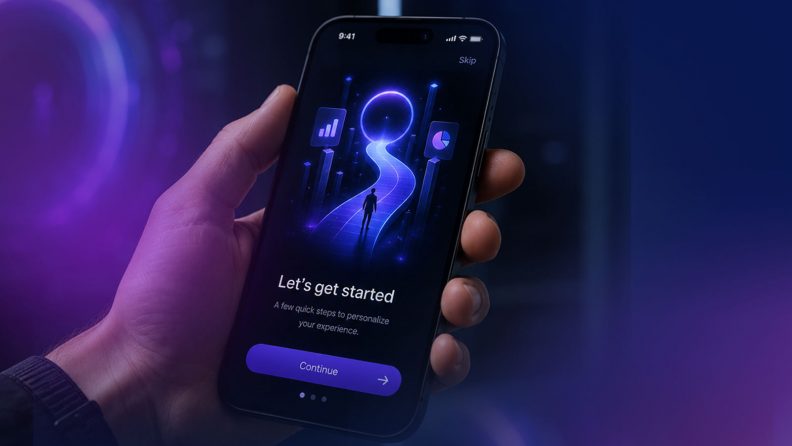
There is a moment in every mobile product that matters more than any other. It is not when a user discovers an unexpected feature. It is not when they complete their first transaction or reach their first goal.
It is the moment, usually within the first three minutes of opening an app for the very first time, when they decide whether it deserves their continued attention.
That decision is rarely conscious. It is felt. The app either makes sense, or it does not. It either delivers value quickly enough, or it demands too much before giving anything back. It either feels designed for someone like them or it feels generic and effortful.
Once that feeling takes hold, it is nearly impossible to reverse. Users who leave after the first session almost never return. Users who stay and find value are far more likely to come back. The gap between the two groups is almost entirely determined by the quality of the app onboarding experience.
What we see consistently across mobile products
Across the mobile products we have built and rebuilt, one finding holds striking consistency: the variable that most reliably predicts whether a user returns on day one is not the quality of the core product. It is whether the user experienced genuine value before the first session ended.
That difference shows clearly in the numbers. Day one retention rates vary enormously across products in the same category, and the gap between 25% and 40% may sound modest, but compounded across a meaningful user base over any significant period, it represents an enormous difference in active users, engagement, and ultimately revenue.
- 25% Typical day-one retention without intentional onboarding
- 40% Achievable day-one retention with a well-designed app onboarding experience
- 3 min window in which most users decide whether to stay
In almost every case where we have investigated that gap, onboarding is where the divergence originates: whether the user understood what the product was for, whether they experienced its value before being asked to give anything in return, whether the first session felt worth repeating.
These outcomes are not accidental. They are designed or, more often, they are left undesigned in the decisions made about onboarding before the app ever ships. Understanding mobile app onboarding best practices begins with recognizing the patterns that consistently undermine them.
Three things most mobile app onboarding experiences get wrong:
Explaining the product instead of demonstrating it
The most common onboarding mistake is using the first session to tell users what the app does rather than showing them. Feature walkthroughs, capability lists, and permission requests presented before any value has been delivered ask users to invest attention before they have any reason to do so. The onboarding experiences that retain users get to value first and explain later.
Designing for the average user instead of the individual
A generic app onboarding experience treats every new user identically. But the signals are already available from the very first interaction: device type, location, time of day, referral source, and early in-app behavior. Effective app onboarding UX uses these signals to make the experience feel personal from the outset, not dramatically, but enough that the product begins to feel relevant rather than generic from the very first session.
Building onboarding at the end of the project
This is the most consequential mistake, and the least discussed. Most mobile product projects treat onboarding as an afterthought, designing the core product first and fitting the onboarding around what already exists. The result is an onboarding experience that mirrors the product’s internal structure rather than the user’s journey through it.

Getting to value quickly requires knowing, from the very start of a project, which moments in the product are most likely to drive the decision to return, and designing the entire onboarding experience around reaching those moments as directly as possible.
What great onboarding does
The mobile app onboarding experiences that drive long-term retention share a set of characteristics that are straightforward to describe and genuinely difficult to execute well.
- They deliver value before asking for anything. Users understand what the product can do for them because they have experienced it, not because they have been told about it.
- They are short. Not because brevity is a virtue in itself, but because every additional step between installation and first value is an opportunity for the user to leave. The best onboarding experiences are ruthlessly disciplined about removing anything that does not directly accelerate the path to that first meaningful moment.
- They set accurate expectations. Users who understand both what a product is for and who it is designed for are more likely to stay. Those who misunderstand it are more likely to leave when reality does not match what they imagined.
- They treat the end of onboarding not as a destination, but as the beginning of a continuous process of personalization and value delivery, one that evolves as the product learns more about the individual user.
The role of AI in onboarding
Most discussions of AI in mobile products focus on the ongoing experience: recommendations, personalization, and intelligent search. These matter. But AI has an equally significant role to play in onboarding specifically.
The signals available during a user’s first session, combined with contextual data available at the point of installation, are sufficient to begin building a clear picture of who that user is and what they are likely to value. A product that uses those signals can begin shaping the app onboarding experience from the very first interaction, rather than waiting until a usage history has accumulated. The effect of those early decisions on day one retention and long-term engagement is substantial.
And, like every other aspect of onboarding, it must be designed from the start of a project, not retrofitted once the core product exists.
The first experience shapes every experience after
When Robosoft rebuilt the McDelivery platform for McDonald’s India, onboarding UX was not treated as a wrapper around the core product. It was treated as the first commercial moment. The question was not how to explain the app to a first-time user; it was how to get someone who is hungry right now to their first order as quickly and as confidently as possible.
That reframe changed every onboarding decision: what was shown first, what was deferred, how much information was requested before the first order was placed, and how the experience was designed for someone making a decision under time pressure with a specific outcome in mind.
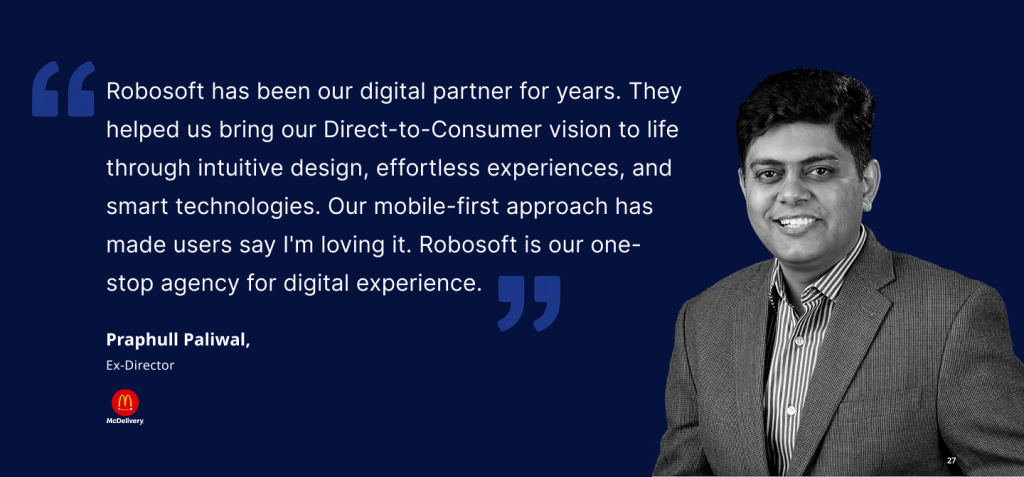
The result: a 55% increase in mobile orders and over 1 million downloads, sustained through repeat behavior rather than acquisition spend.
The same thinking shaped the Invesco Mutual Fund platform rebuild. The onboarding was designed to get an investor who already knew what they wanted to the information they needed as directly as possible.
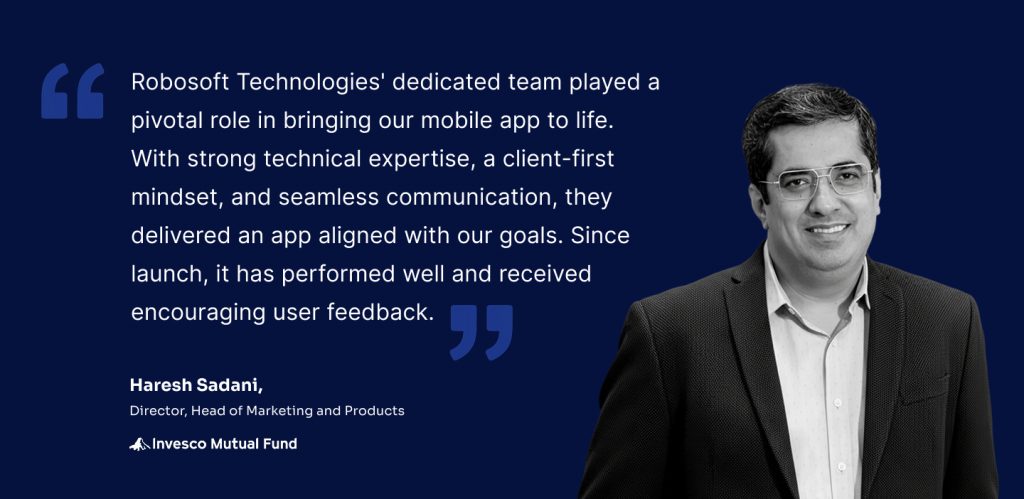
Downloads tripled within six months, and the platform sustained 800,000 monthly active users.
The questions worth asking about your own onboarding
Most teams can answer detailed questions about their core product with confidence. The same precision is worth bringing to onboarding.
- How long does it take for a new user to experience the first moment of genuine value in your product?
- What percentage of users who install your app actually complete the onboarding?
- At which point do most users who leave choose to leave?
- When was your onboarding last redesigned from the user’s perspective, rather than updated to accommodate a new feature?
The answers reveal more about long-term retention prospects than almost any other set of metrics. They are worth knowing and acting on before the next release cycle, not after the next retention review.
Robosoft Technologies builds mobile applications for some of the world’s most demanding consumer and enterprise brands, from platforms driving 55% increases in mobile orders to fintech apps sustaining 800,000 monthly active users. If you are thinking seriously about the role onboarding plays in your mobile product’s retention performance, we would be glad to have that conversation.
Get in touch: [email protected] · www.robosoftin.com