
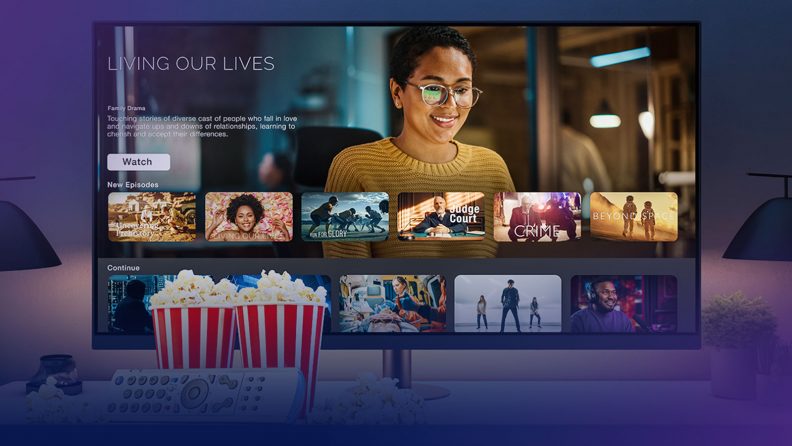
The industry has changed. The thinking hasn’t caught up.
For most of the last decade, success in streaming meant one thing: subscriber growth. Platform launches, content wars, exclusive deals, and market expansions. The metrics that defined winners and losers were acquisition metrics. How many people signed up? How fast did the number grow? How much of the market do you own?
According to MNTN Research, US streaming subscriptions hit 339 million in 2025. Only 1 in 5 people who try a streaming service convert to a paid subscription. And the market remains so fragmented that even the biggest platforms hold just a fifth of it.
Yet according to Ampere Analysis, the industry is still spending $101 billion on content in 2026, chasing the same acquisition playbook. The numbers are large. But so is the number of people walking away. And that is the problem; no acquisition metric was ever built to solve.
That era is not over. But it is no longer sufficient.
The platforms that are winning today are not necessarily the ones with the largest content libraries or the most aggressive acquisition spend. They are the ones who have started asking different questions. Not how do we get more people to sign up? But how do we make the people who have signed up never want to leave?
That is a fundamentally different problem. It requires fundamentally different thinking about what a streaming platform actually is, what it needs to do, and how it needs to be built.
Why content alone no longer wins
The assumption that content drives OTT subscriber retention made sense when the streaming market was young. If you had the shows people wanted to watch, they would stay. If you didn’t, they left.
That equation has not disappeared. But it has become significantly more complicated.
The average streaming subscriber today has access to multiple platforms simultaneously. The decision they make every evening is not which platform to subscribe to. It is the question of which platform to open. And that decision, made in seconds, often based on what appears on screen in the first moment, is where OTT subscriber retention is won or lost.
Content is what brings an audience to a platform. Experience is what keeps them there. And experience, in streaming, is determined by three things above all others.
How quickly and accurately a platform surfaces content that feels personally relevant. How reliably it performs at the moments that matter most. And how intelligent it is to understand that what a viewer wants at 7 pm on a Tuesday is different from what they want at 11 pm on a Saturday.
These are not content problems. They are technology problems. And the platforms that are solving them are pulling away from the ones that are not.
The three battlegrounds that will define the next decade
Personalization at the individual level
The recommendation engine has existed in streaming for years. But there is a significant difference between a recommendation engine that suggests content based on broad viewing history and one that understands individual behavior patterns, time of day, viewing context, and emotional state well enough to surface the right content at the right moment every time.
The difference shows up in numbers. When Robosoft rebuilt the Magnolia Network platform around a unified content and commerce experience, with personalization and audience intelligence embedded from the start rather than added later, the result was 38-minute average session engagement. Not because the content has changed. Because the experience of finding and engaging with that content changed fundamentally.
The shift that is happening now is from personalization as a nice-to-have to personalization as the primary retention mechanism. Audiences do not consciously notice when a platform knows them well. They simply stay longer, return more often, and cancel less frequently.
Live events as the retention anchor
Live sports and live events have become the most strategically important content category in streaming, not because of the audiences they attract in the moment, but because of the retention effect they create over time.
A subscriber who watches live sport on a platform is significantly less likely to cancel than one who watches only on-demand content. The regularity of the live schedule creates a habitual return. The emotional investment in the content creates platform loyalty that on-demand viewing rarely generates.
But live events are also where streaming platforms are most exposed. Unlike on-demand content, which is prepared, tested, and ready before a viewer ever presses to play, live has no such safety net. A delay of seconds, a buffering screen at the wrong moment, or a platform buckling under the weight of millions tuning in at once are not edge cases in live streaming. They are everyday realities. The technical demands of delivering live content to millions of concurrent viewers simultaneously are unlike anything on-demand streaming requires. The margin for error is zero.
When Warner Bros. Discovery needed a platform capable of sustaining live Olympic and FIFA World Cup streaming, the engineering challenge was not just scale. It was maintaining the quality and consistency of the experience for every viewer simultaneously, at peak load, with no margin for degradation. The platform held over 1 million concurrent users. That is not a technical footnote. It is the proof of what the right architectural decisions, made early enough, actually enable.
Ad-supported monetization done intelligently
The shift towards ad-supported tiers is now well established across the streaming industry. What is less settled is how to make those tiers work, for the platform and for the viewer simultaneously.
The fundamental mistake most platforms make is treating ad-supported streaming as an engineering problem rather than an experience problem. The question is not how to insert advertising into a viewing session. It is how to deliver advertising in a way that does not break the experience that keeps the audience there in the first place.
The platforms getting this right are building contextual monetization systems with real-time audience intelligence at their core. They know when a viewer is deeply engaged and when they are browsing. They know which moments in a session tolerate interruption and which ones do not. That intelligence, built into the platform rather than layered on top of it, is what separates ad-supported streaming that grows revenue from ad-supported streaming that accelerates churn.
The technology decisions that determine which side of the line you end up on
Every streaming platform faces a set of foundational technology decisions that determine its retention capability long before any content is commissioned or any subscriber acquired.
The architecture decisions made at the start of a platform build determine whether it can scale for live events three years later without complete re-engineering. The personalization of infrastructure decisions made in year one determines whether the recommendation engine can evolve to individual-level intelligence or remain permanently constrained by its original design.
The design decisions made before engineering begins determine whether an experience feels intuitive and frictionless or creates small moments of frustration that compound over time into cancellation.
These decisions are not reversible without a significant cost. The platforms that get them right from the start pull away from the ones that get them wrong and spend years trying to catch up.
What this means for anyone building or running a streaming platform today
The OTT subscriber retention wars are already underway. The platforms winning them made better decisions about architecture, OTT personalization, live event engineering, and the relationship between design, engineering, and AI.
The question is not whether retention matters. It is whether your platform is built to win at it.
Four questions worth asking honestly:
Can your platform hold under the maximum live event load? Does your OTT personalization engine understand your audience at an individual level or a segment level? Are your design, engineering, and AI disciplines working as one team or handing off to each other? Are you measuring the metrics that predict retention or the ones that report on acquisition?
The answers determine which side of the OTT subscriber retention wars you end up on.
Robosoft Technologies builds OTT and streaming platforms for some of the world’s most demanding media organizations, from live Olympic and World Cup streaming at 1M+ concurrent users to lifestyle platforms with 38-minute average session engagement. If you are thinking about what your platform needs to win the retention wars, we would be glad to have that conversation.
Get in touch: [email protected] · www.robosoftin.com