As streaming platforms expand beyond borders, language is no longer a feature; it is a core experience layer. Viewers expect content to feel native, culturally relevant, and effortless to navigate, regardless of geography.
Building a multilingual streaming platform is not just about translating text or adding subtitles. It requires engineering systems that can handle language, metadata, discovery, performance, and personalization at scale.
For global OTT platforms, multilingual capability directly impacts reach, engagement, and retention.
Building a truly multilingual OTT platform means spanning every touchpoint from onboarding and navigation to content discovery, playback, and customer support. Each language introduces its own complexities, from script direction and typography to reading speed, cultural nuance, and accessibility expectations.
At scale, these challenges multiply. Content libraries grow, regions expand, and updates become more frequent. Without the right foundations, multilingual experiences quickly become inconsistent, fragile, or difficult to manage.
Without a deliberate OTT localization strategy, teams fall into the most common pitfall: treating localization as an afterthought. When language support is bolted on late, teams struggle with broken layouts, truncated metadata, mismatched subtitles, and fragmented user journeys.
Successful multilingual platforms are engineered differently. Language is built into the platform architecture from the start across CMS workflows, APIs, design systems, and playback pipelines.
Our work on large, multi-region streaming platform localization projects has shown that strong content management is essential. Metadata must be structured to support multiple languages, search and recommendations must remain accurate across locales, and editorial teams need tooling that allows updates without friction.
This becomes especially important in regions where viewers switch languages within the same household or session. Supporting seamless language switching without restarting playback or losing context significantly improves the viewing experience.
Accessibility also plays a critical role. Subtitles, closed captions, and audio descriptions must adapt not only to language but also to reading speed, line length, and screen size. Designing these elements with care ensures inclusivity while preserving immersion.
Performance cannot be overlooked. Multilingual platforms often serve audiences across geographies with varying network conditions. Engineering efficient content delivery and caching strategies helps maintain playback quality regardless of location.
At Robosoft, we’ve helped media and entertainment brands implement OTT localization across regions and devices, combining experience design, multilingual CMS architecture, and enterprise-grade engineering to deliver platforms that feel native in every market.
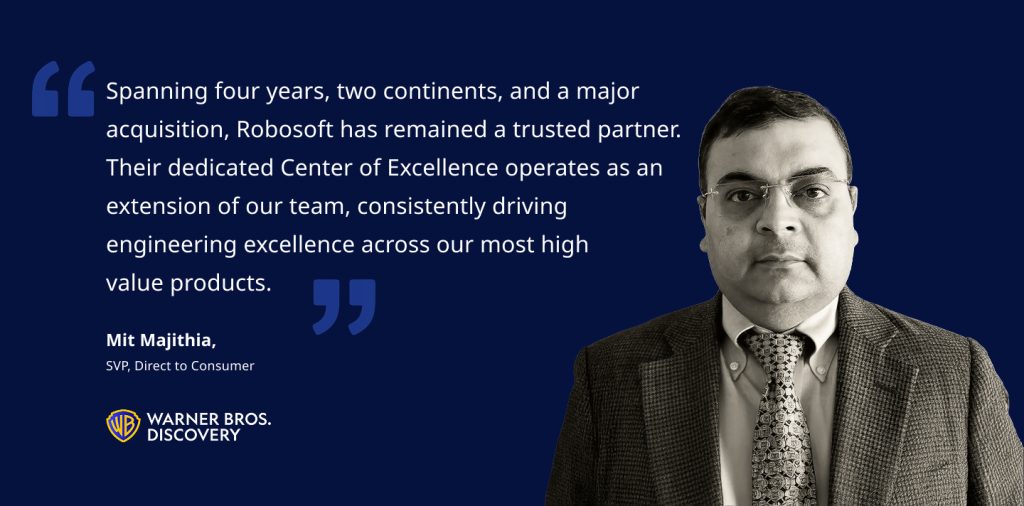
As one long-term partner notes:
As global competition intensifies, OTT platform localization will increasingly define which platforms succeed in new markets and which struggle to scale.
At Robosoft Technologies, we engineer multilingual streaming platforms that balance cultural nuance, technical robustness, and operational scalability, helping brands deliver experiences that feel local, perform reliably, and grow globally.
Planning to take your streaming platform to new markets? Talk to our Media & Entertainment engineering team about building multilingual experiences that scale.